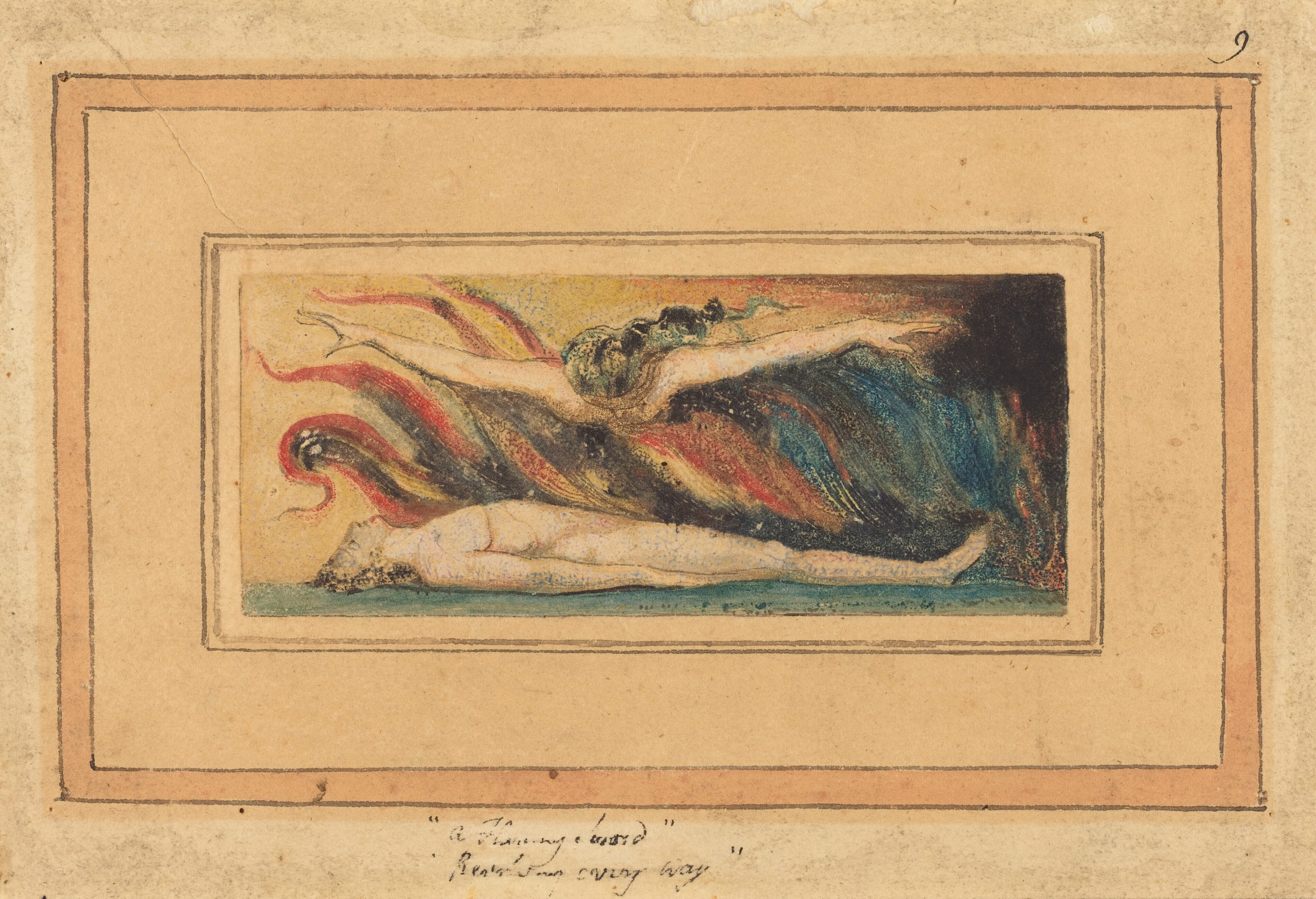
The Soul hovering over the Body – William BlakeAudio Podcast
The Ultimate Hope?
Most Christians, if asked about their ultimate hope, would answer something like this:
“When I die, I’ll go to heaven.”
And in one sense, that answer isn’t wrong.
The New Testament does speak about believers being “with Christ” after death. It speaks of comfort, rest, and joy in God’s presence.
But here’s the problem:
That answer is incomplete.
And when it becomes the whole answer, it quietly distorts the Christian hope.
In this episode, I want to suggest something that may feel surprising—even unsettling at first:
Heaven is not the end of the Christian story. It is real. It matters. (God created it, after all….that’s right, heaven was created too.)
But it is not the final destination.
The Question We’ve Been Asking
For generations, Christians have been taught—often unintentionally—to ask the wrong question.
The question we’ve learned to ask is:
“How do I get to heaven when I die?”
But that is not the central question Scripture is asking.
The Bible’s great question is:
What is God going to do with his creation?
When you follow Scripture from beginning to end—from Genesis to Revelation—you discover that the Bible is not primarily about escaping the world.
It is about God redeeming, renewing, and restoring what he has created..
As N. T. Wright puts it, the idea of “going to heaven” functions as shorthand for something temporary, not ultimate.
The difference between temporary and final is crucial.
What Happens When Christians Die?
Before we go any further, we need to be clear.
Neither N. T. Wright nor G. K. Beale, the two theologians I refer to in this series, deny that believers are with God after death.
They believe that. I believe that.
Scripture, after all, is explicit on this point.
Paul writes in Philippians 1:23:
“My desire is to depart and be with Christ, for that is far better.”
And in 2 Corinthians 5:8:
“We would rather be away from the body and at home with the Lord.”
So yes—Christians who die are with Christ.
But notice what Paul does not say.
He never says: this is the final hope. (Read all of his letters, you won’t find him saying that).
Instead, Paul consistently points beyond this intermediate state to something still future.
Wright summarizes this with a memorable distinction:
There is life after death—and then there is life after life after death.
Tom Wright
In other words….It’s a two stage process.
The first stage refers to being with Christ at death.
The second refers to bodily resurrection.
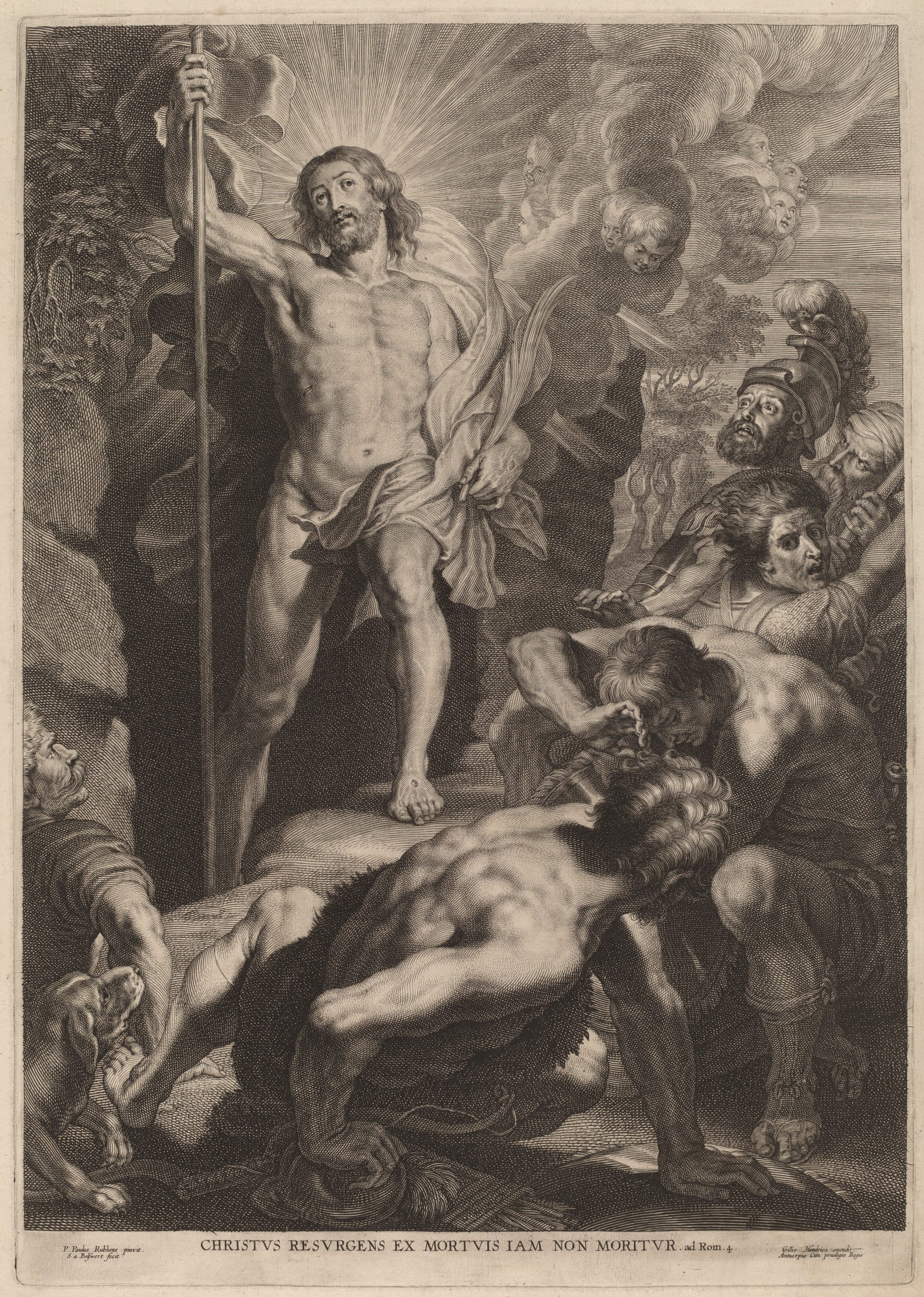
And resurrection—not heaven—is the centerpiece of Christian hope.
Resurrection Is Not Optional
If you want to know what the earliest Christians believed about the future, you don’t start with Revelation.
You start with 1 Corinthians 15. Where…
Paul does not treat resurrection as a metaphor.
He does not treat it as poetry.
He treats it as non-negotiable.
He says in 1 Corinthians chapter 15 verse 14:
“If Christ has not been raised, then our preaching is in vain and your faith is in vain.”
And again in verse 20:
“But in fact Christ has been raised from the dead, the firstfruits of those who have fallen asleep.”
“Firstfruits” implies more to come. (That would be us)
Resurrection is not about floating souls.
It is about embodied life restored and transformed.
Paul goes even further in verse 26:
“The last enemy to be destroyed is death.”
Now. If death were the gateway to our final destiny, Paul would not call it an enemy.
I’ve experienced the death of people that I love, perhaps you have too, and in my case, after they suffered long illnesses, and in a sense there is ‘release’ at that point, but we should never call death our friend, for it is our enemy.
Let me put it this way…..
Death is defeated not by escape—but by resurrection.
Since, in the biblical story, it is the body that dies, if the body is not raised, then death has not been defeated. That’s the description of death. At death, the soul, the invisible part of our nature, is separated from our visible nature, our bodies.
But if the invisible and the visible are not rejoined, then death has not been defeated. It’s just been described.
Again, the separation of body from soul is the definition of death, not its defeat. If the body is not raised. More particularly, if Jesus’s body was not raised (which is Paul’s primary point) then our faith is in vain. Our enemy has triumphed.
Why “Going to Heaven” Shrinks the Story
When Christians collapse their hope into “going to heaven,” several things happen.
First, the material or visible creation becomes disposable.
Why care for the world, the world of space, time and matter, if it’s all going to be “left behind?” (Perhaps you’ve heard that ‘popular phrase.’)1From Tim LaHaye’s Left Behind book series
Second, the body becomes secondary.
Why does embodiment matter if our future is disembodied? (Some Christians think that our destiny as humans is to become angelic. That’s incorrect. More about that later.)
Third, our mission gets reduced to evacuation.
“Save souls. Get em out of here, successfully. That’s our mission.” So we’re told….
But the Bible tells a different story.
In Romans 8, Paul says that the whole creation itself is groaning—not for annihilation, but for renewal. Let me read that full very important passage:
For I consider that the sufferings of this present time are not worth comparing with the glory that is to be revealed to us. For the creation waits with eager longing for the revealing of the children of God. For the creation was subjected to futility, not willingly, but because of him who subjected it, in hope that the creation itself will be set free from its bondage to corruption and obtain the freedom of the glory of the children of God. For we know that the whole creation has been groaning together in the pains of childbirth until now. And not only the creation, but we ourselves, who have the firstfruits (there’s that word again) of the Spirit, [we] groan inwardly as we wait eagerly for adoption, the redemption of our bodies. For in this hope we were saved.
Rom 8:18-24
Paul is not talking about existence in ‘heaven’ as our hope. But the renewal of all creation, the creation that had been given over to corruption, to death, most personally, our bodies.
Creation waits with eager longing, Paul says, for “the revealing of the children of God.”
It’s not waiting for escape.
It’s waiting for restoration.
Think about it….The whole creation, the living beings on this planet, are yearning, longing, for what? To be taken up into heaven with the souls of believers?
NO! That’s not the plan.
They are longing for the children of God to take their rightful place as loving overseers, vice-regents of this world of space, time and matter. As imagers of God. That’s what they are longing for. That was the original plan2And God blessed them. And God said to them, “Be fruitful and multiply and fill the earth and subdue it, and have dominion over the fish of the sea and over the birds of the heavens and over every living thing that moves on the earth.”, after all, and God has not changed his mind.
Setting Up the Bigger Story
So here’s where we are at the end of Episode 1.
Heaven is real. But, let’s not forget, or let us learn anew, heaven was created too. That’s what it says at the beginning of the story: “In the beginning, God created the heaven’s and the earth…..” It’s a bi-natured creation.
We’ve also learned that….
Being with Christ after death matters.
But it is not the end of the story.
And finally, the Christian hope is not that we leave earth behind. “This place is not my home…many say.…I’m just a passin’ through.” Actually, that’s not true. It’s not biblical.
The most widely quoted verse in scripture is “for God so loved the world, that he gave his only begotten son..”.3John 3:16 The greek word translated “world” here is kosmos which doesn’t mean humans only, but the whole of creation. God loves all of it.
Sometimes I get the impression, though it may not be their intent, that certain ministers are really saying that “God so HATED the world that he gave his only begotten son…”.
But that, again, is not the biblical story.
In the next episode we will learn more about the Christian hope.
Here is a brief summary:
Heaven and earth will be joined
God will come down and dwell with humanity
And all Creation will be made new
We’ll go all the way back to Eden and follow the biblical story forward—briefly—through temple, exile, Jesus, and finally new creation.
Because once you see that story clearly, you’ll never read the Bible—or your own future—or the future of God’s good creation, the same way again.
Assumptions Challenged
If this episode challenged assumptions you’ve carried for years, that’s okay. I carried many of those same assumptions until I was taught the bigger story.
The Christian hope is bigger than many of us were ever taught.
And that’s good news.
Quotables
N. T. Wright — Heaven Is Not the Final Destination
“Heaven is important, but it is not the end of the world. In fact, it is not the end of anything. It is the beginning of a new world.”
— Surprised by Hope
Life After Death vs. Life After Life After Death
“Life after death is a real and wonderful thing. But it is not the Christian’s final hope. The final hope is the resurrection of the body and the life of the world to come.”
— Surprised by Hope
Resurrection as the Center
“Resurrection does not mean life after death. It means life after life after death.”
— Surprised by Hope
Death as the Enemy
“If death were the final state God intended for human beings, it would not be described as ‘the last enemy.’ Death is an intruder, not a friend.”
— Surprised by Hope
G. K. Beale — God’s Goal
“God’s original purpose was to fill the entire earth with his glorious presence.”
— The Temple and the Church’s Mission
“Behold, the dwelling place of God is with man. He will dwell with them, and they will be his people.”
Most Christians, if you asked them what they hope for after death, would probably say something like this:
“I’ll go to heaven.”
And that answer isn’t wrong.
But it’s not the whole story.
In fact, when that answer becomes the entire story, it quietly reshapes how Christians think about their bodies, their work, their suffering—and even the world itself.
This short series exists to recover something larger, richer, and far more biblical:
The Christian hope is not escape from the world, but resurrection and new creation 1Gal 6:15 & Isa 65:17-18.
The Problem We’re Addressing
Over time, many Christians have absorbed a view of the future that sounds spiritual—but actually shrinks the Bible’s vision.
It goes something like this:
Earth is temporary
Heaven is permanent
Bodies don’t matter much
History is winding down toward evacuation
But when you read Scripture carefully—from Genesis to Revelation—that is not the story you find.
The Bible does not begin with souls in heaven.
It begins with God creating a good world (that’s what He called it) and dwelling with humanity in that world.
And it does not end with humanity leaving creation behind.
It ends with God dwelling with humanity in a renewed creation.
Why This Series Matters
This matters because what you believe about the future shapes how you live in the present.
If your hope is escape, then:
the body (the material world) becomes secondary
work becomes temporary
suffering becomes meaningless
creation (the material creation, that is,) becomes disposable
But if your hope is resurrection and new creation, then:
bodies matter
faithfulness matters
justice matters
and acts of love are never wasted
Christian hope, rightly understood, is not passive.
It is deeply formative.
What This Series Will Do
In this three-part series, we’ll walk through Scripture with the help of two careful biblical theologians: N. T. Wright (Oxford) and G. K. Beale (Reformed Theological Seminary).
Not because they are novel or trendy, but because they help us see what the Bible has been saying all along.
Here’s where we’re going:
Episode 1
Why “Going to Heaven” Is Not the End of the Story
We’ll clarify the difference between:
being with Christ after death
and the final Christian hope of resurrection
We’ll see why the New Testament treats resurrection—not heaven—as the centerpiece of Christian expectation.
Episode 2
From Eden to New Jerusalem
We’ll briefly trace the biblical story from the Garden of Eden through Israel’s temple, Jesus himself, and finally Revelation chapters 21 and 22. It will be a quick study, but I think you will benefit from it.
Along the way, we’ll see that God’s goal (end – telos) has always been:
to dwell with his people in a renewed world.
Episode 3
Resurrection, Renewal, and Living the Future Now
Finally, we’ll explore how this hope reshapes daily life.
What does resurrection mean for:
the body?
work?
suffering?
mission?
the way Christians face death?
This episode is about living today in light of tomorrow.
The Larger Story of God
If some of this sounds unfamiliar—or even unsettling—that’s okay.
This series isn’t about winning arguments.
It’s about recovering a hope that is:
more biblical
more embodied
more realistic
and ultimately more hopeful
The goal is not to discard heaven.
It is to place heaven within the larger story God is telling.
Invitation
The Bible’s final vision is not of souls escaping earth.
It is of:
God coming down to dwell with humanity
Creation renewed
Resurrection completed
That is the hope Christians are invited to live toward.
And that is the hope this brief series explores.
Thanks for listening. I hope you’ll join me as we explore why “going to heaven” is not the end of the story.
Welcome back to the Podcast. I’m glad you’re here with me today. We’re tackling a big cultural question—the growing obsession with what can be called the promise of disembodiment. That’s the idea that our bodies don’t matter, that they’re just clay to be reshaped, husks to be discarded, or even obstacles to the “real” self.
Today, I want to walk with you through this lie, why it’s so appealing, and why the Christian vision of the body offers a much more beautiful, hopeful truth.
Naming the Lie
The cultural signs are everywhere. Abortion framed as a right to bodily “autonomy.” Gender ideology claiming male and female are optional. Assisted suicide presented as dignity. Even futuristic fantasies of uploading our minds into machines. (Yeah, there are some technologists out there that are presenting that as a possibility.)
All of these share the same root assumption: the body doesn’t matter.
“Those of us who know that we were created in God’s image have no choice but to acknowledge our bodies, those awkward earthly vessels that matter and cannot be manipulated as if they were raw material for our disembodied wills.”
That’s exactly it. Either the body is a gift with meaning—or it’s just raw material, something to use, discard, or redefine.
And when we lose the sense of the sacredness of the body, Leibovitz warns,
“Take away this belief in the sacred character of the body and it becomes not a temple but a speed bump.”
A speed bump. Something in the way. Something to get past. That’s the lie we’re facing.
Why the Lie Is Attractive
Let’s be honest—this lie is appealing because it promises freedom. If my body doesn’t matter, then I can do whatever I want with it. I can erase biological sex. I can evade the consequences of sex. I can even reject life itself if it doesn’t feel worth living.
But this so-called freedom is actually a prison. Leibovitz writes:
“When you do away with the sanctity of the body, you invite tyranny, because you are no longer bound to acknowledge what is real, only what is willed.”
If all that matters is my will, then whoever has the strongest will gets to impose their version of “reality.” And that’s not freedom—that’s bondage.
The Christian Response
Here’s where Christianity gives us something radically different.
The very first chapter of the Bible declares:
“So God created man in his own image, in the image of God he created him; male and female he created them” (Gen. 1:27).
Jesus himself reaffirms this in Matthew 19:4: “Have you not read that he who created them from the beginning made them male and female?”
The Apostle Paul drives it home: “Do you not know that your bodies are temples of the Holy Spirit, who is in you…? You are not your own; you were bought at a price. Therefore honor God with your bodies” (1 Cor. 6:19–20).
The Christian response to the lie of disembodiment is simple but profound: your body matters. It’s not a mistake. It’s not an accident. It’s not raw clay for you to remake. It is God’s creation, God’s gift, and God’s temple.
Why This Matters Today
This isn’t just theory. It affects the way we live right now.
Children are told they can “change” their sex.
The elderly are told their lives are no longer worth living.
The unborn are treated as disposable tissue.
And technology dangles the fantasy of living without flesh at all.
But Christians know better. As Leibovitz reminds us:
“The rejection of the body is the rejection of limits, and the rejection of limits is the rejection of responsibility. And where responsibility vanishes, so does love.”
That’s the key. Love requires limits. Love requires responsibility. Love requires embodiment.
Think about it: Christ didn’t love us from afar. He took on flesh. He bore our sins in his body. He rose bodily from the grave. Real love shows up in the flesh.
It is no good to say: “Be warmed, be filled, go in peace” to the poor person (James 2:15-16). You gotta give them a cloak. You gotta give them food. That’s what it means to love your neighbor.
The True Promise
So what’s the alternative to the lie?
It’s not escape. It’s not disembodiment. It’s resurrection.
The gospel promises that these very bodies—frail, weak, mortal—will be redeemed. Paul writes in Romans 8:23 that we await “the redemption of our bodies.” Christ himself is the guarantee, the firstfruits of the resurrection.
So, no, we don’t hope for disembodiment. We don’t hope for escape. We hope for restoration, fulfillment, resurrection glory.
Friends, the promise of disembodiment is a lie. It sounds like freedom, but it ends in alienation and death. The true promise is this: your body matters. God made it, Christ redeemed it, and the Spirit indwells it.
So let’s live that truth with courage and joy. Let’s reject the lie. And let’s proclaim to the world: our hope is not to leave the body behind—but to rise with it, made new, forever.
Thanks for joining me today on the Podcast. Until next time, remember—your body is a temple, and your destiny is resurrection.